CFO
“Why is cash falling despite profit?”
Explore movements in receivables, payables and inventory.
SynqLedger Intelligence · Available in preview
Ask a business question in plain language. Intelligence uses the business records you’re permitted to see to explain your numbers, identify what needs attention and suggest next steps. Answers identify their source, period and currency, with links to supporting records where available.
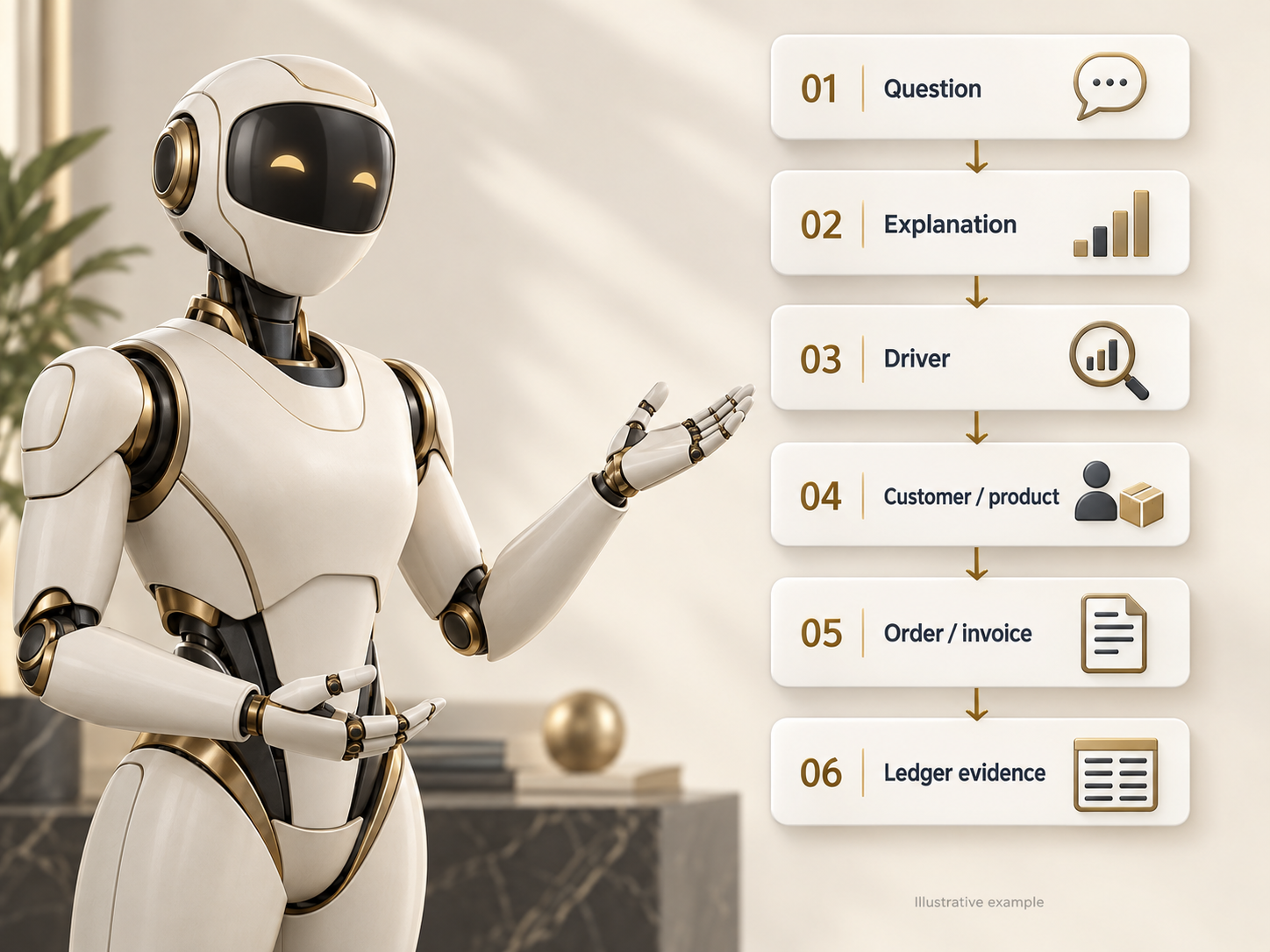
Question
“Why are sales down?”
Explanation
Sales fell 11.7%, with four identified drivers and an unexplained remainder.
Driver
Customer volume −5.4 pts
Customer / product
Two accounts, three product lines
Order / invoice
The specific documents behind the movement
Ledger evidence
The journal that produced the reported figure
Illustrative trace. An explanation is only offered where the evidence supports it.
Available in preview for signed-in SynqLedger users.
Read-only by design. Intelligence works within your existing permissions and selected company. Group analysis requires separate group access. It explains and suggests; it cannot post journals, approve actions, move money or change records.
Honest about how current it is. Where an answer rests on a calculated analysis, Intelligence re-runs that analysis when the underlying entries have moved. Not every change is detected automatically — a revised definition, mapping or assumption is not — so an answer always states the period and the moment it was produced rather than claiming to be permanently current.
Verified preview coverage
The preview can combine permitted readings across finance and close, cash and working capital, sales movement, purchasing, inventory and manufacturing, people totals, assets, statements and VAT, budgets, and group results. Where evidence is unavailable or a supporting link does not exist, the answer says so.
Illustrative demonstration
One question, answered across customers, products, inventory and finance, with anything it cannot explain shown rather than hidden.
Customers
Two accounts reduced order frequency
Products
Mix shifted to lower-value lines
Inventory
Stock-outs on two fast movers
Finance
Revenue agreed to the ledger
Illustrative explanation
Sales ↓ 11.7%
▼ bars left of the centre line reduce sales; ▲ outlined bars right of it increase sales.
Every figure in this walkthrough is illustrative and is not customer data.
From question to next step
The preview supports questions, investigation and evidence-backed suggestions. Authorised people review recommendations and act through existing governed routines.
Available in preview
Ask
A plain-language business question.
Understand
Resolved against permitted, company-scoped records.
Investigate
Sources, periods, currencies and available record links.
Suggest
Written action plans and proposed next steps for people to review. These do not create transactions or change business records.
Human-controlled
People approve and act
Authorised people review recommendations and act through existing controls.
Questions in scope
Explore business questions using the records you’re permitted to see, with supporting detail where available.
Explore movements in receivables, payables and inventory.
Identify outstanding items that need attention before closing.
Explore changes in customer activity, sales volume and product mix.
Review cash positions across the accounts you’re permitted to see.
Investigate available manufacturing cost and variance records, where supporting detail exists.
Compare entity contributions and consolidation adjustments, subject to group access.
Answers depend on the records available; where evidence is missing, Intelligence says so.
Trust
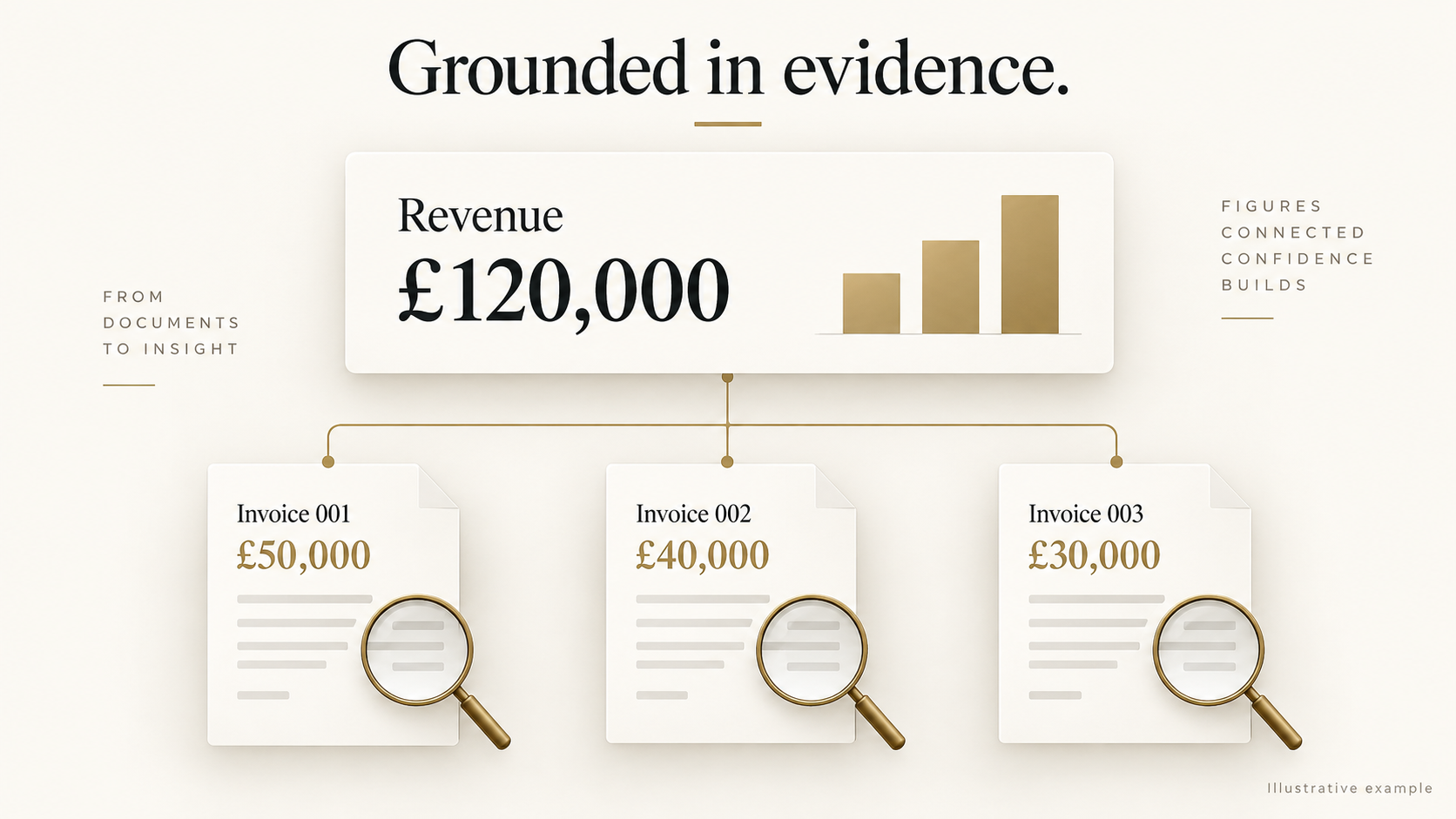
Answers use only the business records you’re permitted to see, with supporting evidence kept connected to the explanation.
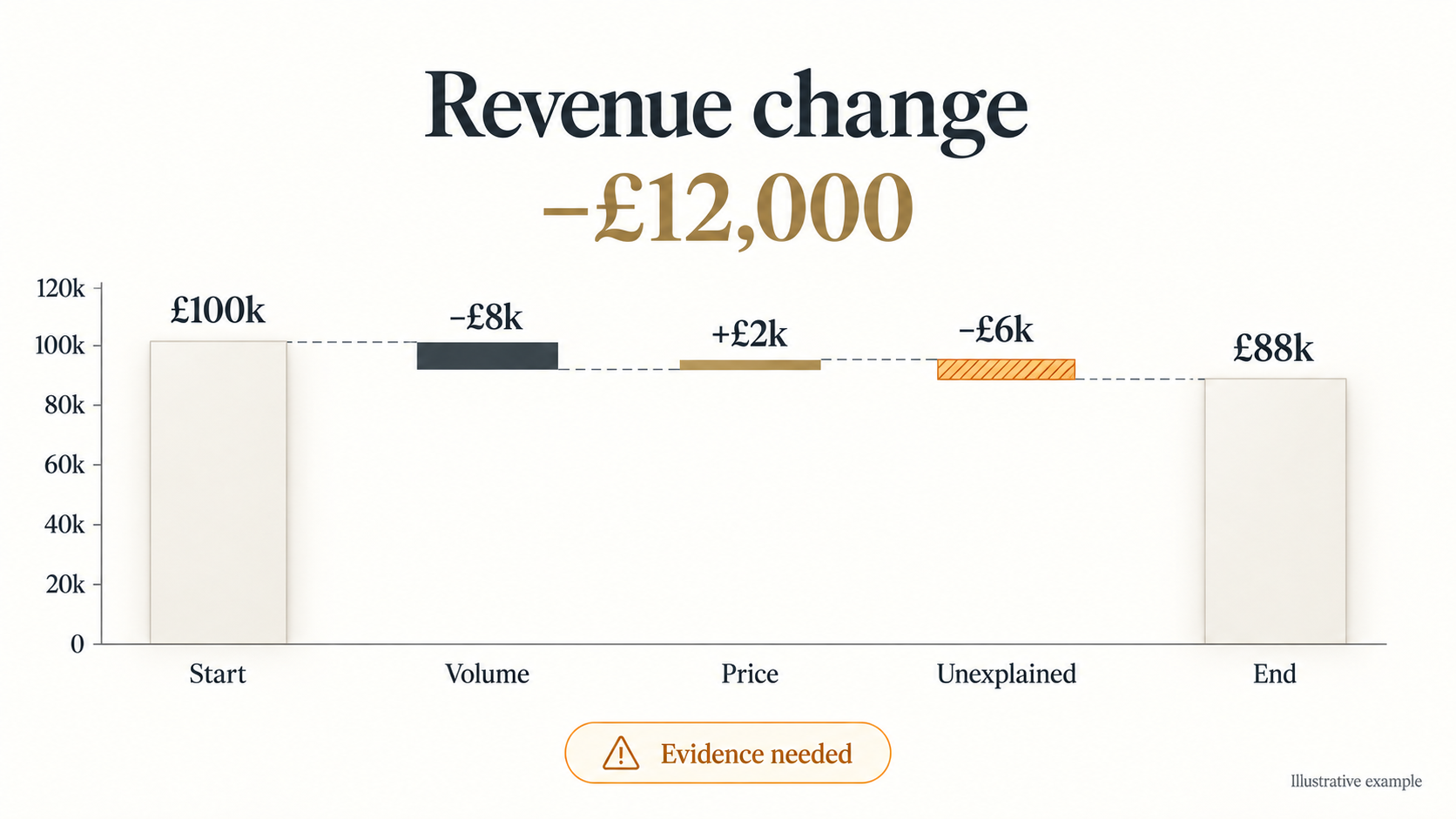
Missing evidence and unresolved amounts are disclosed and flagged for review rather than invented or hidden.
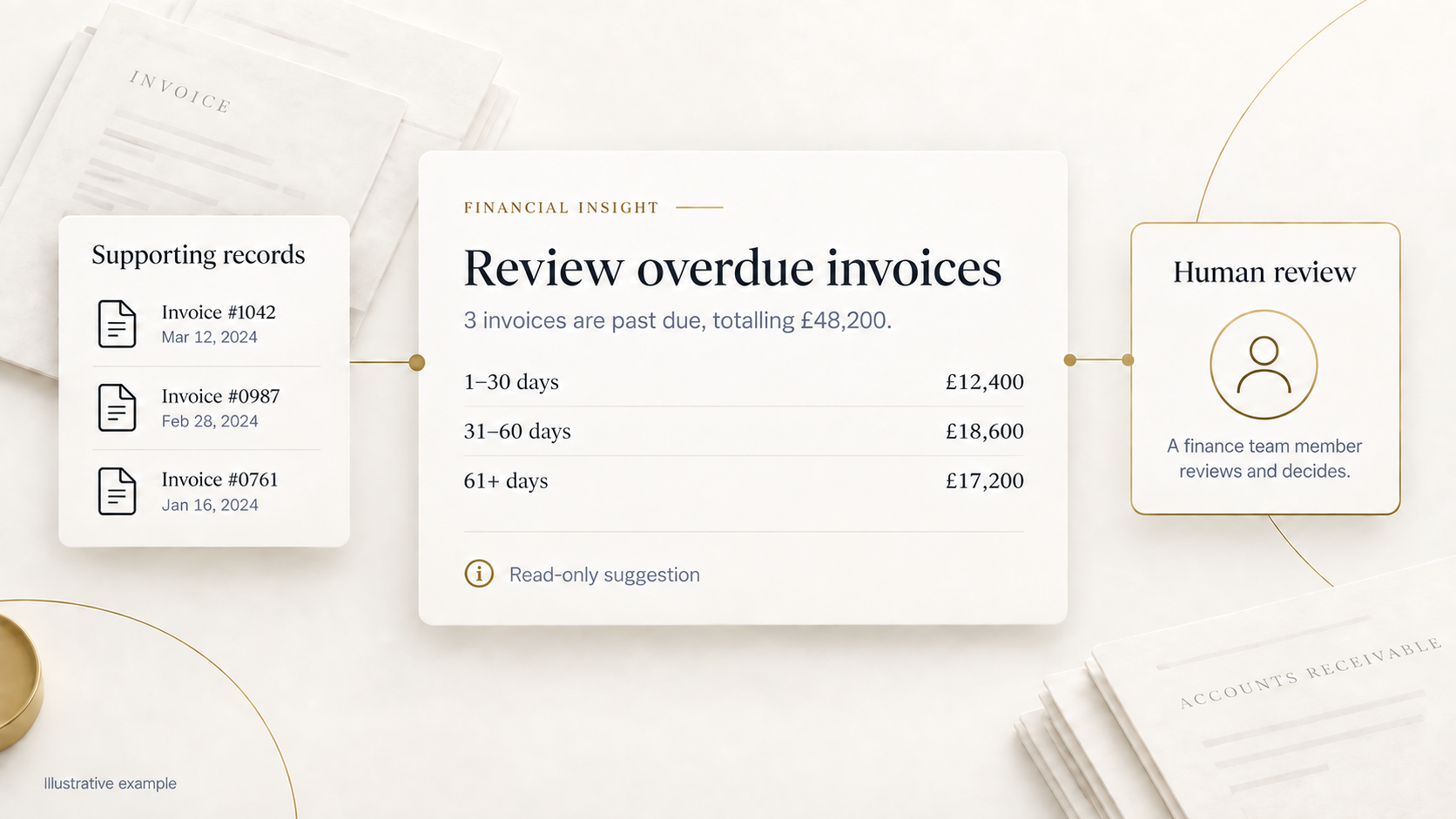
Intelligence can explain and suggest, but it cannot post journals, approve actions, move money or change records. Authorised people decide and act.
Intelligence draws on the accounting and operational records already held in SynqLedger. It uses the information you’re permitted to see to explain your numbers and suggest what to investigate next.
Step 1: Business records
Accounting and operational information
Step 2: Permission checks
Your existing access and selected company; separate access for group analysis
Step 3: Analysis and explanation
Sources, context and available supporting-record links
People decide and act through existing approvals and controls. Intelligence cannot post journals, approve actions, move money or change records.

Where it lands
Intelligence supports the moment before a decision, when someone asks a question the reporting pack does not answer and needs to inspect the evidence behind the explanation.
See how governed operational and financial evidence turns business questions into traceable explanations and evidence-backed suggestions.